
Dry-type transformer 35 kV: a reliable solution for power systems
2026-06-20
content
The 35 kV dry-type transformer is not just a component of the power system. This is a decision that determines whether a substation will operate without accidents in the Siberian cold or on the Black Sea coast with high humidity and salt fog. We have been designing, testing and supplying such transformers for seven years now - and we know for sure: the choice between an oil-based and a dry device at this voltage decides not only the economics of the project, but also the service life of the entire distribution network.
Why 35 kV is the “boiling point” for dry transformers
At a voltage of 35 kV, the insulation requirements increase sharply. Oil transformers have dominated here for decades - but the cost of operation is growing: regular oil changes, monitoring the tightness of the tank, fire restrictions in the premises, difficulties during transportation. Dry-type 35 kV transformers close these gaps - but not all models are equally reliable. We saw how in one project in Kazakhstan the winding failed due to overheating in hot July: the cooling was calculated at +25°C, but the actual temperature reached +48°C. The problem is not technology, but the lack of climate adaptation.
A reliable 35 kV dry-type transformer must withstand:
- Temperature range from −40 to +55°C without loss of power;
- Humidity up to 95% without condensation;
- Insulation class F/H with a heating margin of at least 10K;
- Test voltage 170 kV (according to GOST R 52736-2007 and IEC 60076-11).
We check all these parameters individually - each product undergoes a three-hour load test at full rated power and a subsequent dielectric strength test in a humidity-controlled chamber.
What “dryness” hides - and why it’s important
A 35 kV dry-type transformer is not an “oil-free” transformer, but a system where the insulation is made of epoxy resins, fiberglass and impregnated paper. But it is the quality of impregnation and the uniformity of the fill that determine the service life. In our laboratory in Wenzhou, we detect microdefects in insulation at an early stage using ultrasonic flaw detection and absorption coefficient (DAR) measurements. If DAR is below 1.5, the product is not included in the shipment. This rule is stricter than required by the IEC standard.
We also encountered a mistake made by customers: choosing a transformer based only on power. In fact, the decisive ones are:
- Winding connection diagram (Y/Yn-0 or Y/Δ-11) - affects harmonics and compatibility with existing switchgear;
- Accuracy class of current transformers of built-in measuring circuits (0.2S or 0.5);
- The presence of Pt100 temperature sensors in the hot spot zone of the windings - predictive monitoring is impossible without them.
All of these items are not options. They are included as standard on our QN-TF35 series models.
How reliability works - from plant to substation
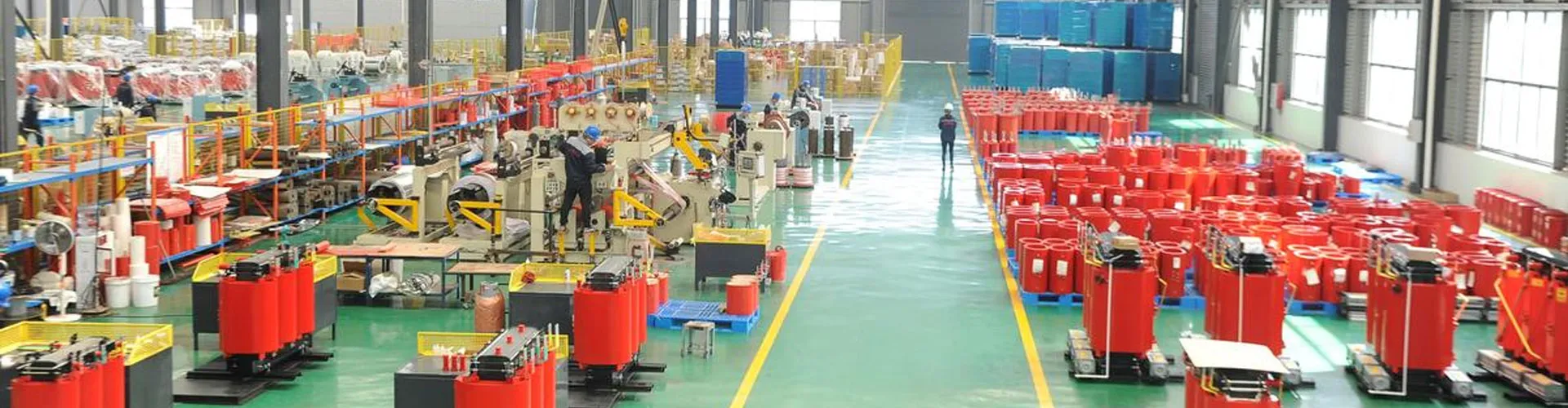
The 35 kV dry-type transformer does not tolerate compromises in assembly. On our production line in Wenzhou, the electrical capital of China, every stage is controlled: winding windings in an ISO 8 class clean room, vacuum filling with epoxy at a strictly specified viscosity and temperature, heat treatment in an oven with a smooth rise and holding time for 24 hours. Deviation from the schedule is a defect. This discipline provides a guarantee of 30 years of service, subject to compliance with the operating conditions.
Clients often ask: “What to do with corrosion in the conditions of the Urals or the Far East?” The answer is simple: the cases are made of AISI 316 stainless steel, and the fasteners are made of titanium. This is not marketing. This is a reaction to real cases: in one of the projects in the Murmansk region, after 5 years of operation, we compared two transformers - with regular steel and with AISI 316. The first had through corrosion at the fastening points, the second had only a slight trace of salt deposits.
Choice is not a technical task, but a partnership
A dry-type 35 kV transformer is not a product that can be bought “from a catalogue”. It requires engineering reference: calculation of heat flows in the switchgear room, coordination with the automated process control system, checking compatibility with automatic backup input. Wenzhou Qiaonasen Electrical Equipment LLC provides not just equipment, but technical support at all stages: from calculating no-load losses to on-site commissioning tests. All documents are in Russian, with reference to Russian standards (PUE, GOST, STO JSC FGC UES).
If your task is to ensure uninterrupted operation of the substation without the risk of fire, oil leakage and unscheduled downtime, the 35 kV dry-type transformer becomes not an alternative, but a mandatory standard. And the choice here is not between brands, but between approaches: template or systemic. We choose system.