
Transformers for data centers: what is important to remember when it seems that everything is already clear
2026-01-09
content
When they talk about transformers for data centers, many people immediately think about efficiency, about “golden” efficiency. Tier standard, about reservation. And this, of course, is the base. But there are subtleties that come out already at the operating stage, and which are often kept silent in beautiful catalogs. Let's put it this way: the difference between ?works? and ?works stably and predictably? - just in these details. Many times I have come across a situation where on paper the diagram is ideal, but on site they start “dancing with a tambourine”. around the same dry-type transformer.
Not only efficiency: about heat and acoustics in real conditions
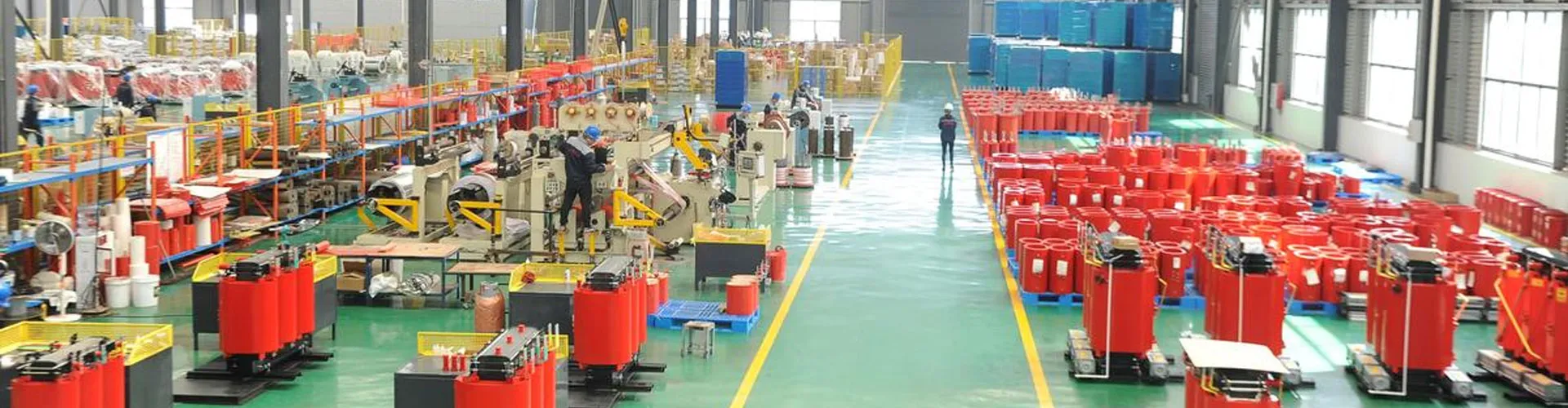
Everyone is chasing high efficiency, and rightly so. But high efficiency is not just about saving on electricity. This is, first of all, less heat that needs to be removed. And this is where the fun begins. A dry-type 10 kV transformer standing in the machine room is not just a piece of hardware. It heats up, and this heat goes into the room. If the data center cooling system is designed with a margin, then fine. What if not? In summer, at peak load, this is an additional headache for the climate.
Therefore, when choosing, we always look not at one parameter, but at a combination: efficiency at 50% and 75% load, permissible ambient temperature for operation without degradation, cooling method. There have been cases when a customer saved on a transformer, took a model with passive cooling, but less efficient, and then spent money on increasing ventilation. As a result - no savings.
And the second point is noise. Stained glass grilles, airflow - all this creates the background. For a server room this is not critical, but if there are auxiliary rooms for staff nearby or, God forbid, an office area, then acoustic comfort becomes an important factor. It is necessary to consider options with noise-insulating casings, which again affects heat dissipation and requires more careful design.
Redundancy: the N+1 scheme is not a magic pill
Classic of the genre - systemtransformers for data centerswith N+1 redundancy. It seems that everything is simple: one failed, the other took over the load. But in practice, automatic transfer switching (ATS) is a potential point of failure. Switching speed, phase synchronization, load behavior at the moment of transition - all this needs to be tested, and under a real, and not a nominal load.
I once observed a situation where, when an automatic transfer switch was triggered due to a current surge, the protection at the input was also triggered. It turned out that the transformers were from different manufacturers and had a slight variation in short circuit parameters. Everything in the passports is normal, but in total it had an effect. I had to “customize” it? protection settings, which took time. Conclusion: for a reserved pair, it is better to take equipment from the same series, and ideally from the same batch.
And also about the power reserve. Often a transformer is laid “back to back” to the planned data center load. But they forget about the harmonic distortion that UPS and server power supplies create. They cause additional heating of the windings and increase losses. A good practice is to reserve at least 15-20% of the design capacity, especially if scaling is planned. This is not waste, but insurance against future problems.
Integration issues and “little things” that irritate everyone
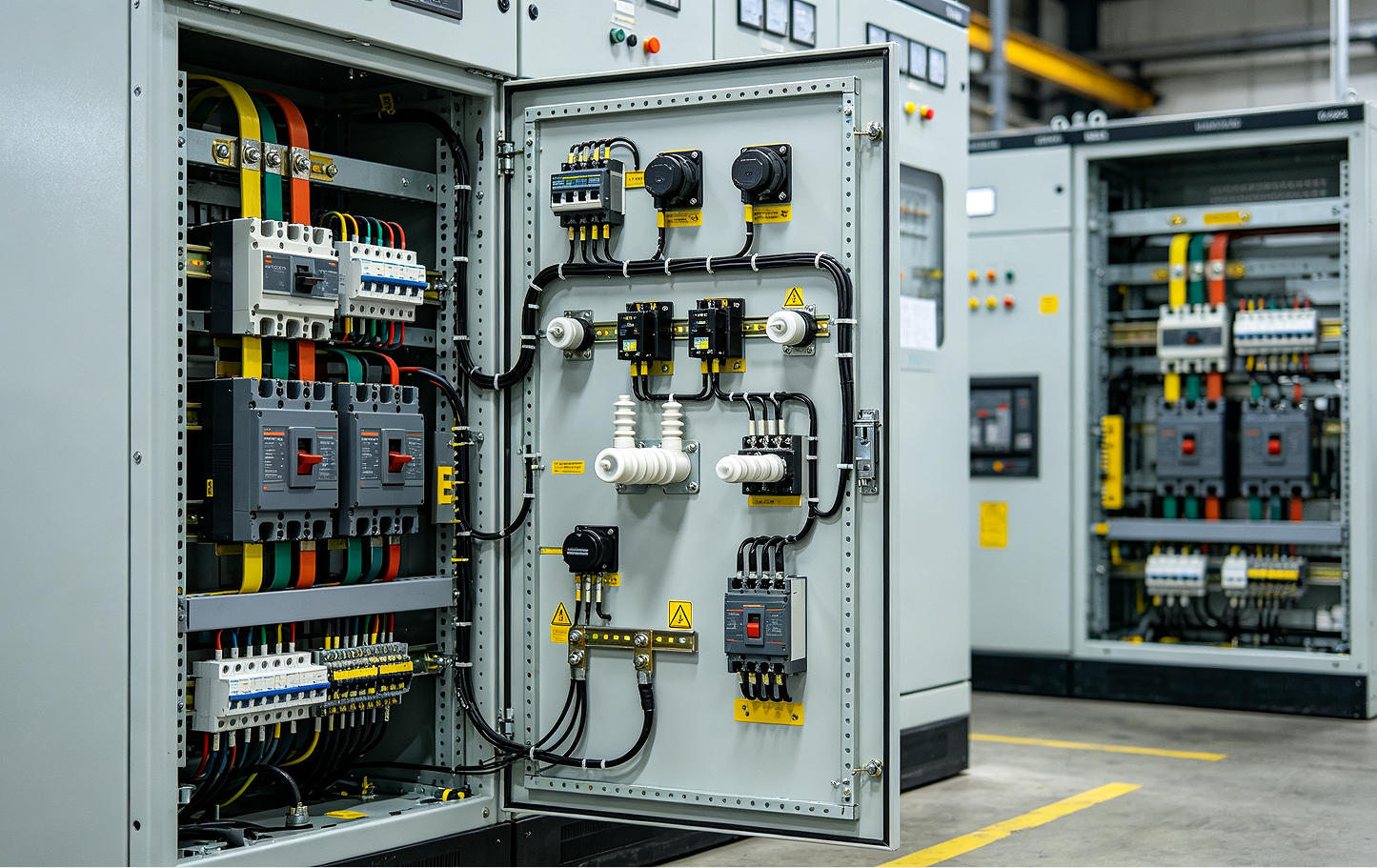
Installation. This seems like a task for builders. But if left unchecked, problems may arise that cannot be corrected later. For example, supplying cables to a transformer. It is necessary to leave sufficient bending and not to strain the power bars so as not to create mechanical stress on the terminals. I saw how, due to the overtightening of the cable, after six months the contact group began to weaken and heating appeared.
Monitoring system. Moderntransformers for data centersoften come with temperature and humidity sensors. But their data needs to be output somewhere and integrated into the overall SCADA system of the data center. It happens that a transformer has its own communication protocol, but a general-facility system has a different one. You have to install gateways or write drivers, which complicates and increases the cost of the system. It is better to work out this issue at the stage of technical specifications.
Here it is worth mentioning companies that specialize in complex solutions, and not just in selling equipment. For example,Wenzhou Qiaonasen Electrical Equipment Co.,Ltd(website:www.qnasen.ru). Their profile is solutions for high and low voltage transmission and distribution and electrical control systems. It’s often easier with such suppliers because they can offer not just a “box”, but an integration scheme, compatible switching equipment and, importantly, technical support that understands how it will all work together in a data center environment.
Reliability vs. Cost of Ownership: Long Talk
The initial cost of a transformer is just the tip of the iceberg. Reliability, which affects the availability of data center services, is priceless. A minute of downtime due to power supply problems can cost more than the entire power supply system. Therefore, saving on the quality of insulation, copper in windings or a protection system is more expensive.
On the other hand, you don’t always need to chase the most expensive and “sophisticated” one. decision. For Tier II data centers where short-term shutdowns for scheduled maintenance are allowed, you can choose a simpler and more maintainable configuration. The key is to adequately assess the risks of the business that will be located in this data center. Sometimes a client requires Tier IV, but in fact their applications can easily endure several hours of downtime once a year. But this is a matter of competent consulting.
Experience shows that the most successful projects are those where the customer’s engineers, designers and equipment supplier (Wenzhou Qiaonasen Electrical Equipment Co.,Ltdas an example of such an integration company) work in dialogue from the very beginning. When all the nuances, from dimensions and weight (remember the load on the floors) to telemetry protocols, are discussed at the early stages.
Instead of a conclusion: thinking out loud
Selection and operationtransformers for data centers- This is not an engineering problem from a textbook. It is a constant search for a balance between cost, reliability, flexibility and serviceability. Specifications are the language in which this search is conducted. The main thing is not to forget what all this is for: to ensure the uninterrupted operation of that very “digital infrastructure” that is now the backbone of almost any business.
Therefore, my advice is to always look a little further than the parameters in the passport. Ask suppliers questions: “What will happen if unforeseen situations arise?” “How will we maintain this equipment in the long term?” “How does the system scale when the facility expands?” The answers to these questions often determine whether a data center's power system will simply perform its basic function or become a truly reliable foundation. And in this context, partners like Qnasen, who think in terms of complete systems rather than individual products, are extremely valuable.