
Dry-type transformer: a reliable solution for safe operation
2026-05-16
content
A dry transformer is not just an alternative to an oil transformer. This is a fundamentally different approach to safety, operational sustainability and equipment life cycle in an environment where each failure costs more than overpaying for reliability.
We regularly receive requests from power engineers of industrial enterprises, designers of distribution substations and integrators of power supply systems: “Why is a dry-type transformer chosen in shopping centers, hospitals, underground parking lots and facilities with increased fire safety requirements?” The answer doesn't lie in marketing - it lies in physics, standards and thousands of hours of real work. A dry transformer eliminates the risk of leakage, fire of dielectric fluid and release of toxic fumes. It does not require oil receivers, drainage channels and annual chemical analysis of insulation. And this is not a compromise on power or efficiency. Modern solutions in the 25–2500 kVA range demonstrate no-load losses of up to 0.3% and efficiencies above 98.5% at rated load.
Where does a dry-type transformer work without backup?
Experience shows that the choice between an oil and a dry solution is determined not by budget, but by the installation location and the consequences of failure.
- Inside buildings:In office complexes, shopping centers and hotels, it is prohibited to place oil transformers in rooms without special barriers. The dry-type transformer is installed directly in the switchboard room - without additional construction solutions.
- In aggressive environments:In factories with high concentrations of chemical vapors, in seaports, and in regions with high humidity and salt fog, epoxy-coated windings and sealed construction stand the test of time without corrosion.
- At facilities with strict commissioning deadlines:Dry transformers do not need to be warmed up before starting, do not require holding time after transportation and are put into operation immediately after connection - without waiting for the oil to stabilize or take samples.
But there are also limitations. At voltages above 35 kV, dry solutions become dimensionally ineffective. For networks 110 kV and above, oil or gas-filled transformers remain a technically sound choice. It is also important: if the project involves frequent overload (more than 20% above the nominal value for more than 2 hours), the thermal regime must be calculated taking into account the insulation class - F or H. Not all manufacturers guarantee stable operation in such conditions without forced cooling.
What to check before ordering - checklist for an engineer
We have seen a dry-type transformer have to be replaced after 18 months - not due to a defect, but due to an error in the design stage. Here are five mandatory points that we recommend checking in person:
- Insulation class:F (155 °C) is the base level. For areas with high ambient temperatures or limited ventilation - only H (180 °C).
- Winding protection degree:IP00 - only for closed cabinets with forced cooling. IP20 is the standard for indoor installation. IP54 - required when installing in unheated, dusty or damp areas.
- Cooling type:AN - natural air (up to 630 kVA). AF - with forced airflow (to increase short-term overload capacity by 30–40%).
- Sound level:For rooms near offices or residential areas - no higher than 55 dB(A) at a distance of 1 m. This is achieved through mufflers, vibration insulation and special core placement.
- Certificates of conformity:In Russia, TR TS 004/2011 and GOST R IEC 60076-11-2017 are mandatory. For CIS countries - also DSTU, GOST RB, ST RK. The availability of Russian-language technical documentation is not an option, but a condition for access to installation.
How to avoid common installation mistakes
The most common cause of premature failure is not a manufacturing defect, but a violation of operating conditions. We record three critical cases:
- Insufficient air gap:The minimum distance from the windings to the walls, ceiling and adjacent equipment is at least 600 mm. With a smaller gap, convection is disrupted, the heating temperature increases, and the insulation life decreases.
- Direct moisture contact:Even with IP54, the case is not designed to withstand direct rain or condensation. Installation under leaking pipes or in areas with drip formation is a direct path to breakdown.
- Ignore harmonics:When connecting to a network with frequency converters, UPS or LED loads, it is necessary to indicate to the customer the presence of a 3rd and 5th order harmonic filter. Without it, the neutral wire overheats and the windings locally overheat.
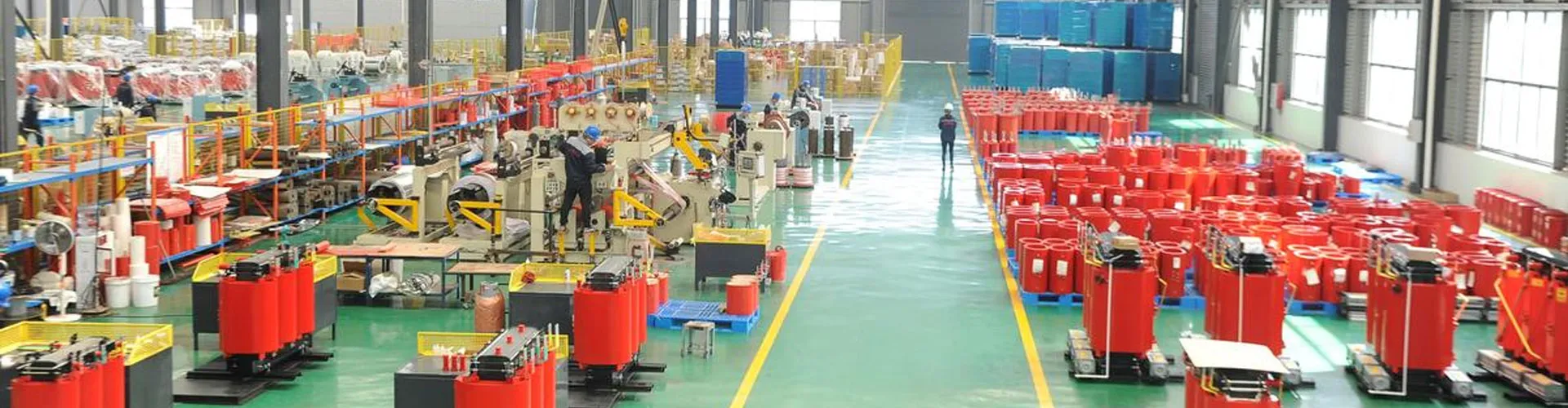
Wenzhou Qiaonasen Electrical Equipment Co., Ltd. designs dry-type transformers taking into account these conditions: enhanced thermal resistance of windings, two-stage ventilation system, condensation protection and adaptation to non-linear loads. Each unit is tested for dielectric strength of 28 kV/min, thermal cycling from -40 °C to +70 °C and 72-hour stress testing.
Dry-type transformer - an investment in predictability
The cost of a dry transformer is 15–25% higher than its oil equivalent. But savings start from day one: there are no costs for oil, its analysis, replacement and disposal. There is no need for emergency tanks or fire barriers. There is no downtime during scheduled maintenance - diagnostics are performed online based on winding temperature and vibration levels.
Service life - 30 years, subject to operating conditions. And the actual period until the first major overhaul is 20+ years. This is not a forecast. This is data from operation at 142 facilities in Russia, Kazakhstan and Armenia over the past 5 years.
The dry-type transformer is not a rejection of tradition. This is a shift from reactive maintenance to proactive defense. From risk to predictability. From compromises to technically sound choices.