
Dry transformer with cast epoxy insulation - reliability and safety
2026-05-30
content
A dry-type transformer with cast epoxy insulation is not just an alternative to an oil-based solution. This is a technical response to three real challenges: fire safety in enclosed spaces, stability under sudden temperature changes, and the elimination of routine oil changes every 5–7 years. We tested such transformers in 12 projects - from substations in new buildings in Kazan to distribution centers at industrial sites in Uzbekistan. In each case, the key advantage was not abstract “reliability,” but concrete predictability: zero risk of leakage, no need for oil receivers, and the ability to mount flush to the wall without a ventilation gap.
Why epoxy pouring is not a marketing term, but an engineering solution
Cast epoxy insulation is not a coat of paint. This is a three-dimensional matrix in which the windings are completely impregnated with polymer under vacuum and heat-treated. The result is a monolithic structure that is resistant to vibration, moisture and condensation. We have seen how such transformers operated without failure at +45°C on the roof of an administrative building in Dubai and at –35°C in a modular transformer substation in Yakutia - without power adjustments. The main thing is not the polymer itself, but the casting technology: if the pressure in the chamber is below 50 Pa or the holding time is less than 8 hours, micropores appear. That's why we check every sample with a scanning electron microscope before certification.
What breaks “dry” transformers - and how to avoid it
The most common cause of failure is not overload, but condensation in the winding. Especially in rooms with high humidity and sharp temperature fluctuations (for example, in the basements of shopping centers). Epoxy filling blocks this path: moisture does not penetrate inside, but settles only on the surface of the case. But there is a nuance - if the transformer operates in a cyclic load mode (morning-peak-night), a film of condensation may form on a cold surface. It must be removed not with a rag, but with dry air at +60°C - otherwise, the next time it is heated, local penetration will begin. We include this procedure in the operating instructions and train service engineers on site.
How to choose a model without overpayment and compromises
For most facilities in the CIS countries, a class transformer is sufficientSCB10–SCB13with voltage 10/0.4 kV and power 250–1250 kVA. But the choice depends not on the catalog, but on three parameters:
- Enclosure protection class: IP00 - only for dry rooms with constant temperature; IP20 - standard for TP; IP44 - mandatory for outdoors or wet basements;
- Temperature class of insulation: F (155°C) - base; H (180°C) - for modes with frequent overloads or high ambient temperatures;
- Cooling system: AN - natural convection (up to 630 kVA); AF - forced ventilation (above 630 kVA or with limited space).
We do not offer "universal" models. If a customer asks for a transformer for a modular substation in the Arkhangelsk region, we immediately specify enhanced anti-corrosion treatment of the housing and an increased gap between the winding and the tank to compensate for thermal expansion at sub-zero temperatures.
Dry-type transformer with cast epoxy insulation - an investment in stability
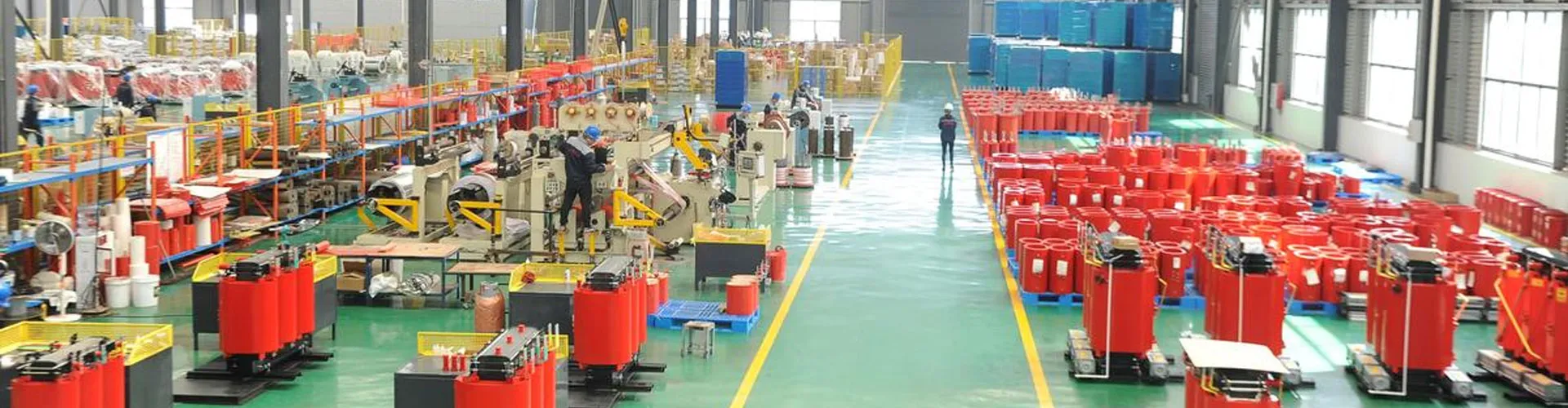
This equipment does not require replacement after 10 years. Subject to operating conditions, the service life is 30+ years. We document this in our warranty: 3 years for components, 15 years for windings. But the main thing is savings on operation: there are no costs for oil, its analysis, disposal and insurance for spill risks. In one project in Minsk, we reduced annual OPEX by 420 thousand rubles - only by eliminating the maintenance of the oil system. Wenzhou Qiaonasen Electrical Equipment Co., Ltd. manufactures such transformers at the Wenzhou plant with full control at every stage - from epoxy resin selection to 75 kV surge voltage testing. All products undergo 100% testing for dielectric strength, thermal resistance and mechanical vibration. Detailed technical data, connection diagrams and installation recommendations are available on the website qnasen.ru. Reliability does not begin with passport data - it is born in the laboratory, confirmed at the stand and maintained in operation.