
Advantages of a dry transformer: a practical view
2026-01-09
content
When it comes to dry-type transformers, many people immediately think about safety and the environment - they say, there is no oil, which means there are fewer problems. This is truly one of the keyadvantages of a dry transformer, but only the tip of the iceberg. In fact, choosing a dry transformer is often a whole story with pitfalls and unobvious benefits that become visible only after several years of operation or, conversely, after a couple of unsuccessful attempts to save money. For example, not everyone takes into account how a specific model will behave in a real damp workshop or under constant overloads paired with a frequency drive.
Safety is not just about the absence of oil
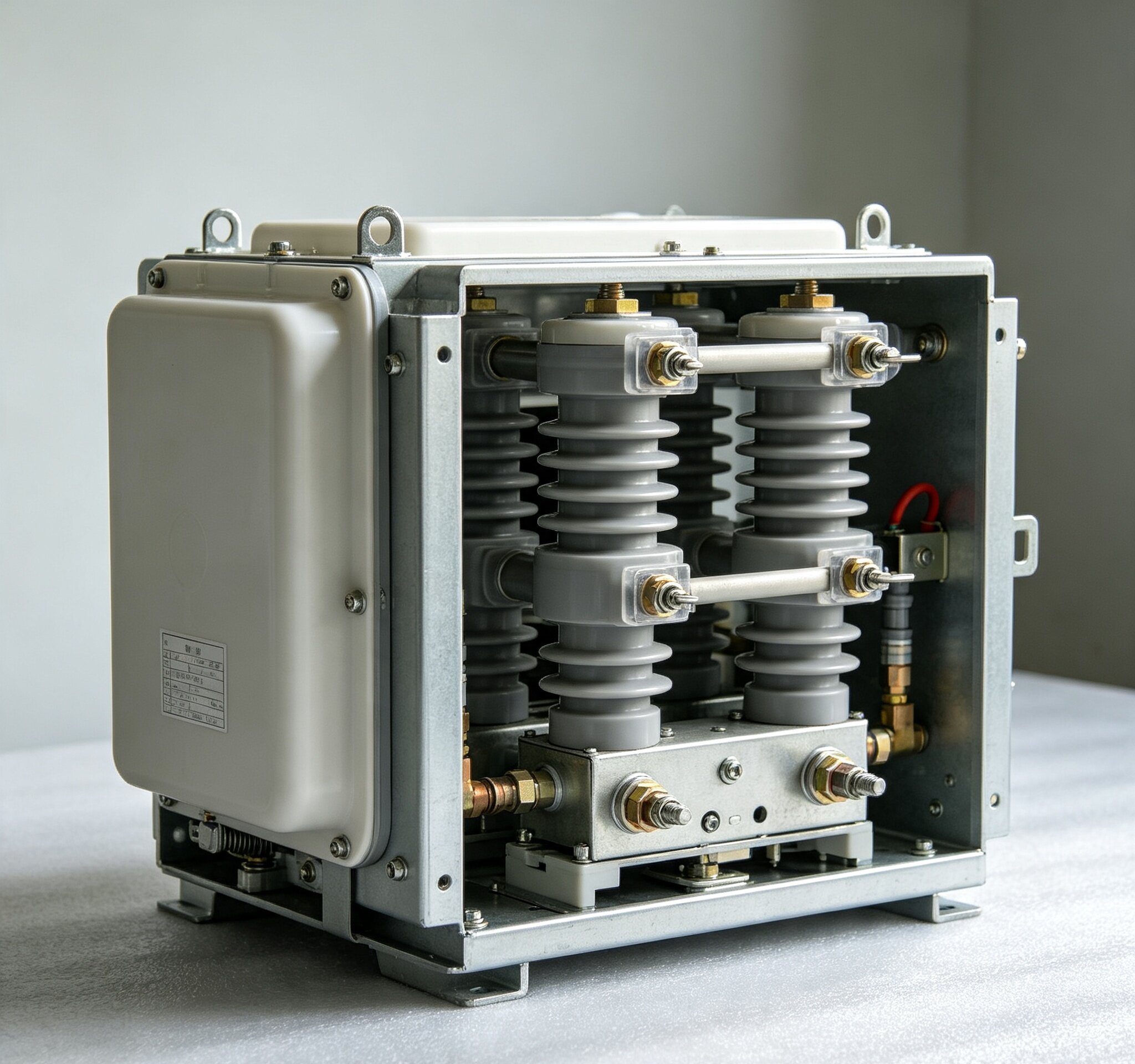
Yes, the absence of a flammable liquid is the main trump card, which is one of the keyadvantages of a dry transformer. The fire inspector will breathe easier, especially if the installation is in a building with people or valuable equipment. But there is a nuance here: the insulation class. Many manufacturers, especially in the budget segment, make the mistake of claiming class F or H, but in fact the insulation does not withstand long-term thermal loads at these levels. I have seen cases when, after two years of operation in a mode close to the nominal value, a noticeable smell of burnt varnish began to smell - this is polymerization of the insulation, and it does not last forever.
Therefore, one of the key advantages is the possibility of installation indoors without additional expensive fire extinguishing measures and without oil receivers. But! This is only true for high-quality devices with a reliable cooling system. If the ventilation ducts are clogged with dust (and this is inevitable in industry), then even a dry transformer can overheat to dangerous temperatures. There is already a question of service.
By the way, about service. Its simplicity is a double-edged sword. On the one hand, there is no need to control the level and quality of the oil; there are no sealed expanders. On the other hand, regular cleaning of the windings from dust is required and, what is critical, checking the condition of the contacts at the points where the busbars are connected. Oxidation there does not occur as quickly as in an oil environment, but in an aggressive atmosphere (chemical production, port) terminal blocks can degrade. I recommend tightening it up once a year.
Operational flexibility and overload resistance
This is where disputes often arise. Some colleagues believe that dry transformers are delicate and are afraid of short-term overloads. In fact, it all comes down to current reserve and thermal inertia - and this is another importantadvantages of a dry transformer. A good dry cast resin transformer (such as Vacuum Pressure Impregnation or VPI technology) has significant thermal capacity. It can withstand overloads of 150% for an hour and a half, but only if it has not previously been heated to the limit. This is important for circuits with the launch of powerful asynchronous motors.
From personal experience: we once installed a transformer to power a group of pumps in a water treatment system. The inrush currents were significant. The oil version would require an increase in power, but we took the “sukhish” one. with a forced air cooling system (AFC). It worked. But we had to additionally think about the ventilation in the room - the heat generation is still significant, and in the heat of summer, without additional airflow to the housing, the temperature on the surface of the windings approached the maximum.
Another practical advantage is the ability to work in non-standard positions. Not always, of course, but many models allow installation with a slight deviation from the vertical, which can be a lifesaver for cramped machine rooms or ship installations. This will not work with oil - circulation and cooling will be disrupted.
Environmental and Total Cost of Ownership Considerations
Going green isn't just for reporting. No oil eliminates a lot of disposal headaches. Disposing of a used oil transformer is a whole epic with contracts, licenses and costs. Dry, by and large, is metal, copper and solid insulation. Easier and cheaper to recycle. But here lies the point for the investor: the initial cost of a dry transformer is, as a rule, higher than its oil equivalent. It is necessary to consider not the purchase price, but the life cycle cost (Total Cost of Ownership).
We must take into account: savings on fire-fighting measures, no costs for oil analysis and oil changes, lower idle losses (in modern models), which, with round-the-clock operation, gives significant savings on electricity - all of these are keyadvantages of a dry transformer. Sometimes the payback on energy efficiency occurs in 3-5 years. But this is if we compare devices of the same class, and not a budget dry one with a premium oil one.
For objects with increased requirements for cleanliness - pharmaceuticals, microelectronics, food production - the absence of the risk of oil leakage is not just a plus, but a prerequisite. One accident involving a spill of transformer oil in a “clean zone” can cost amounts many times greater than the difference in cost between types of transformers.
Application nuances and typical mistakes when choosing
Mistake number one is ignoring climatic conditions. A dry transformer is afraid not so much of cold as of condensation. With sudden changes in temperature and high humidity inside the case, moisture may form on the windings. For such cases, models with heating (anti-condensation heaters) and built-in moisture protection of the insulation are needed. Taking a standard version for the street or an unheated warehouse is a direct path to breakdown.
The second mistake is underestimating the noise level. Modern models have become quieter, but compared to oil models (where the tank dampens the sound), they are still noisier, especially under load. This is critical for installation in a residential complex or office. It is necessary to design soundproof casings, which negates some of the savings on the construction part.
And third is the interaction with nonlinear loads (frequency drives, rectifiers). Higher harmonics cause additional heating of the windings. For ?sukhish? this is more dangerous than for oil, since heat removal is more difficult. The solution is to either provide a power reserve (K-factor) or choose transformers with a special winding design designed for non-sinusoidal currents. By the way, company specialistsWenzhou Qiaonasen Electrical Equipment Co.,Ltd, which specifically focuses on solutions for voltage transmission and distribution, often focuses on this when selecting equipment for complex control systems.
Prospects and the bottom line
The trend is obvious - the share of dry-type transformers in the low and medium voltage segment is growing. Especially in urban infrastructure, data centers, commercial buildings. Their technology does not stand still: new insulation materials with better thermal conductivity, more efficient cooling systems are appearing - and this is an important factor that complements the listadvantages of a dry transformerand expands the scope of their application.
But you shouldn’t blindly chase the trend. For a remote 10 MVA substation in an open field where there are no stringent fire hazard requirements, an oil-filled transformer may remain a more economical and reliable choice. It all depends on the technical specifications and conditions.
So, to summarize, the mainadvantages of a dry transformer- this means safety for people and objects, reduced operational hassle and environmental risks, as well as flexibility for installation in cramped conditions. However, these advantages are fully realized only with the correct choice of model for specific tasks, taking into account all external factors and readiness for possibly higher initial investments. As they say, the miser pays twice - and in the case of transformers, this can result not only in money, but also in long-term production downtime.