
Dry-type transformer life: what really determines longevity?
2026-01-09
content
Everyone says “the service life of a dry-type transformer?”, but in many people’s heads there is some kind of abstract figure, 25 or 30 years, taken out of thin air. In fact, this is not a warranty card, but rather a forecast, and it depends on a bunch of factors that are not written in fine print in catalogs. I often come across the fact that a buyer chooses based on price or dimensions, and then wonders why his neighbor’s unit “breathes?” longer. The biggest myth is that if the transformer is dry, then it doesn’t care. No matter how it is. Its longevity is a story about the quality of insulation, thermal conditions and, what is often forgotten, about the environment in which it works.
The heart of longevity is the insulation system
Here everything depends on the heat resistance class. We take a standard epoxy injection molding transformer. Class F (155°C) is already the norm for most serious projects. But here’s a nuance: the declared class is about the durability of the material, and not about the operating temperature. If the winding is constantly heated to 140°C, even though the material can withstand 155, the resource will begin to melt before our eyes. I saw autopsy reports after 10 years of work: in some places the insulation is still like new, but in others there are already microcracks and signs of thermal aging. The difference is in the overloads.
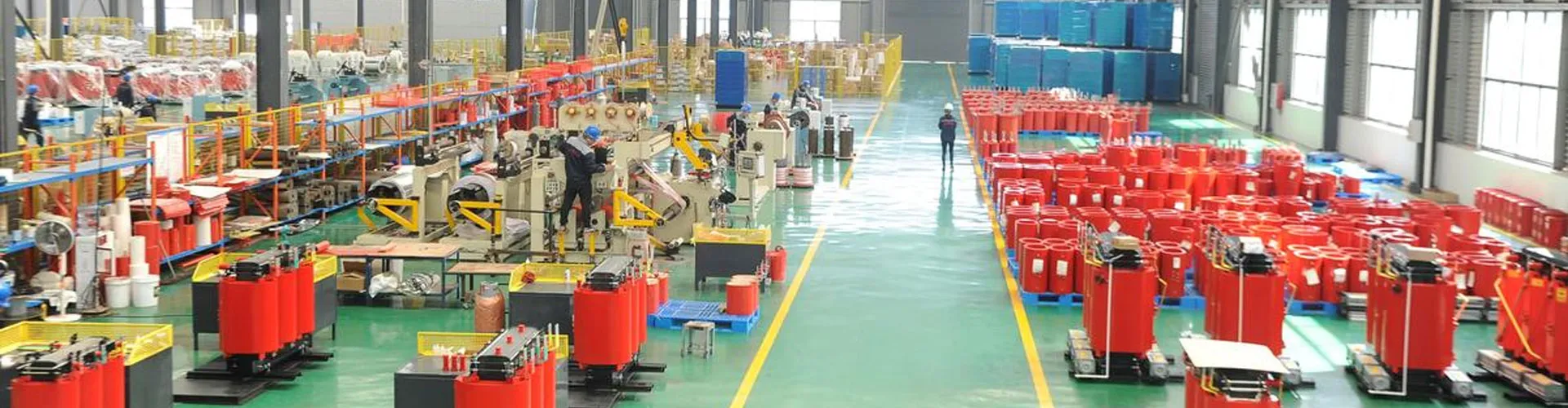
Not only the material is important, but also the technology of impregnation or pouring. Vacuum-pressure impregnation is a must have for reliability. I remember about seven years ago there was an incident with a batch of transformers for a facility in Sochi. High humidity, salt fog. Part of the batch from one manufacturer began to “sweat?” inside, partial discharges appeared. An autopsy showed heterogeneity of impregnation. But the analogues fromWenzhou Qiaonasen Electrical Equipment Co.,Ltd, which were staged at the same facility, went through without any problems. I looked at their website one daywww.qnasen.ru— it is clear that the emphasis is on quality control at the impregnation stage. This is exactly the detail that you won’t appreciate in your passport, but that decides everything.
And one more thing about insulation: often problems are created not by the main windings, but by the interlayer or interturn insulation, especially at the transition points. Where there are sharp edges or where stress is concentrated. A good manufacturer further strengthens these places. Bad - no. And the first sign of future problems is an increased level of noise, not that smooth hum, but with a slight crackling or whistling sound.
Enemy number one is overheating and heat cycles.
The service life of a dry-type transformer is, in fact, the service life of its insulation, and it ages mainly due to temperature. Montinger's 10 degree rule has not yet been canceled: exceeding the temperature by 10°C above the nominal value reduces the life of the insulation by half. But here it is important to understand the difference between the temperature of the environment and the temperature of the hot spot inside the winding. The latter cannot be determined by eye; you need PT100 sensors.
One of the most illustrative cases from my practice is the installation of a substation in a closed room without proper ventilation. The customer saved on the blowing system and relied on natural convection. In the summer, at peak load, the temperature in the upper part of the winding exceeded 160°C at class F. Three years later, the transformer began to shut down due to thermal protection. When they opened it, the insulation darkened and became brittle. I had to change it. Moral: Design of cooling systems is not an option, but a required part of the service life calculation.
Thermal cycles (heating and cooling) are a separate topic. They cause mechanical stress in the cast insulation due to the different coefficient of thermal expansion of copper and epoxy. Over time, this leads to the formation of microcracks. This is especially critical for applications with frequent starts and stops, such as foundries or wind power generation. Here you need to look towards materials with increased elasticity or special design solutions.
Influence of environment and operating conditions
?Dry? - does not mean “omnipotent?”. Dust, chemically aggressive atmosphere, high humidity - all these are killers. Dust settling on the fins of coolers impairs heat transfer and acts as a heat insulator. Humidity above 95% can lead to surface breakdowns of contaminated insulation. I saw the consequences in food production: there was constant steam in the washing shop, the transformer was in a niche. Five years later, traces of surface discharges—“tracks”—appeared on the surface of the active part.
Therefore, complex environments require proper design. For example, transformers with winding insulation coated with a special varnish to protect against moisture and mold, or in a housing with a degree of protection IP54, which, by the way, offerwww.qnasen.ru. Their solutions for high and low voltage distribution often require adaptation to non-ideal conditions. Sometimes the simple step that saves the day is installing a resistance heater in the cabinet to combat condensation during idle mode.
Another hidden enemy is vibration. If the transformer sits on the same plate as powerful motors or presses, mechanical stress can weaken the fastenings of the active part, which over time will lead to increased noise and, in the worst case, damage. This is often forgotten during installation.
Practical aspects: installation, maintenance and monitoring
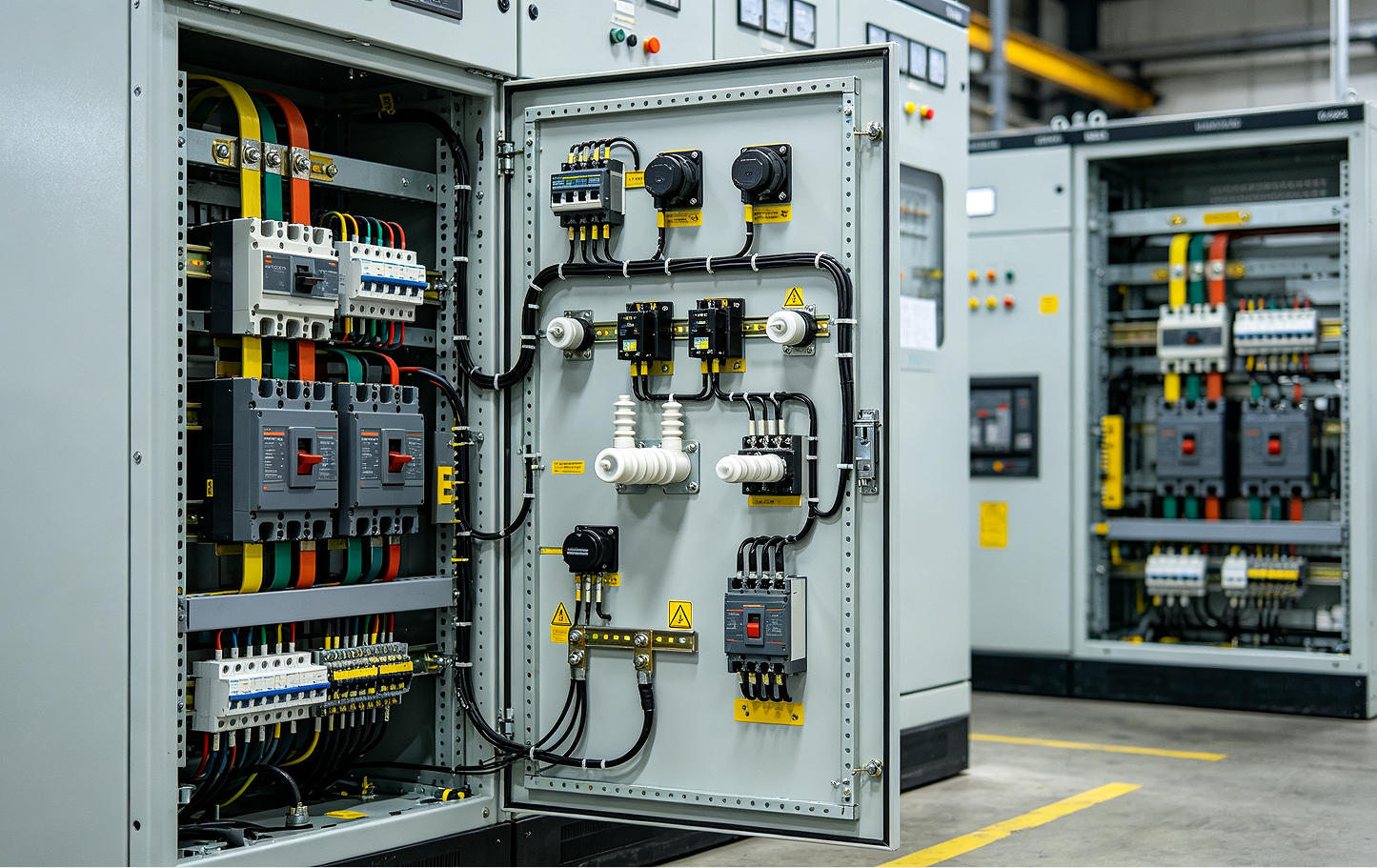
Long life begins with proper installation. Misalignment during installation, undertightened or overtightened busbar connections are sources of local overheating. Once I came to a site where a client complained about the smell of burnt insulation. It turned out that the installers did not remove the wooden transportation bars under the active part, which blocked the air flow from below. Elementary, but the consequences could be serious.
Service. For dry transformers it is minimal, but not completely absent. Once every year or two - visual inspection for dust, checking the cooling system (fans), tightening contacts. The most valuable diagnostic tool is a thermal imager. Periodic thermal monitoring under load allows you to identify overheated connections or uneven heating of the windings even before the protection operates.
The current trend is embedded monitoring systems. Temperature sensors directly in the winding (not outside!), partial discharge sensors. This is no longer a luxury, but a smart investment for mission-critical facilities. They allow you to move from preventative maintenance to condition-based maintenance. This is the real extensionservice life.
Manufacturer selection and life cycle economics
Let's go back to the beginning. The figure of 30 years is achievable, but only with the combination of correct selection, installation and operation. The choice of manufacturer is fundamental. You need to look not at the price tag, but at the technology. For example, the company's specializationWenzhou Qiaonasen Electrical Equipment Co.,Ltdon solutions for voltage transmission and distribution implies that their products are initially designed for long-term operation in real networks. What is important is reputation, the presence of serious references, and not just a beautiful catalog.
The economics here are simple: a more expensive, but high-quality transformer with a better insulation system and thoughtful cooling will work without problems for 25+ years. A cheap analogue may require repair or replacement within 10-15, and taking into account downtime and cost of ownership, it will be more expensive. You need to consider the total cost of ownership.
As a result,dry transformer service life- this is not a passport value, but a variable that is in the hands of the consumer himself. You can reduce it by putting a good device in hellish conditions without maintenance. And you can make the most of your resource by paying close attention to all stages: from choosing a supplier like Qnacen, which offers proven solutions (https://www.www.qnasen.ru), before the annual inspection with a thermal imager. The main thing is to understand that longevity is built at the project stage, and is not bought in a box.